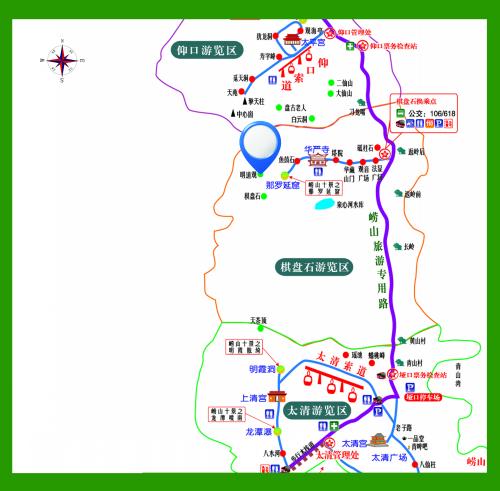
明道观
明道观,始建于清康熙五十三年(1714年),是一座道教观院。
明道观海拔700米,是崂山现有的宫、观、庙、庵中地势最高的一座。尽管地势较高,但周围群峰环抱,形成了一个极为幽静的小环境。整个道观原来是一个方形院落,东西30米,南北25米,正殿3间,左配殿6间,右配殿3间;院内北侧有一张石桌,是古时遗留下来的。
观外有三株银杏树,树高都在20米以上,最高的近30米,胸径1米左右,树龄超过1000年。据专家分析,这些古树大约植于唐代后期,推算起来,与孙昙奉旨来崂山采药炼丹有关。至于是否孙昙亲手栽植,有待进一步考证。
据《崂山地名志》载,唐朝天宝二年(743年),这里就有过“建筑物”,据推测,应当是孙昙在崂山采药炼丹的一座草堂。
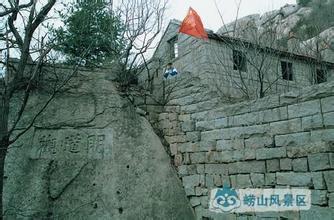
明道观西南涧水的东侧有一方大石 ,刻有“敕孙昙采仙药山房”八个大字和观音菩萨像,旁边镌有“天宝二年敕采药孙昙”等字。由此处向西30米处有一块巨石,刻有一篇六十余字的碑文,记载了孙昙来崂山采药的相关事宜,因年代久远,刻石被风化剥蚀,文字已经难以全部辨认了,所能依稀辨识的有“大唐天宝二年三月初六日奉敕采仙药孙昙以俟来命”字样。这些刻石是孙昙的弟子们后来镌刻的,证明早在1200多年前,这里便有来崂山采药炼丹的方士居住过。
现存的道观建筑,是清康熙年间白云洞道士田白云的传人宋天成来这里创建的。山门右侧有清宣统二年(1910年)书“明道观”三字。明道观原建时属于白云洞孙不二创建的清净派,后于乾隆中期改属全真金山派。
全真清静派的创始人是孙不二,孙不二本身是位坤道,全真七子之一,号称“清净散人”,世人称她为“孙仙姑”,曾被元世祖封为“清净渊贞玄虚顺化元君”。
明道观后面的招风岭上有两处天然洞窟:一处称“天然洞”,曾是观里道士修炼之处;一处名“三真洞”,是明道观较早的三位道长的藏骨处,也称“三仙洞”。
Mingdao temple
Initially built in 1714 (53th year of the Kangxi reign of the Qing dynasty), Mingdao temple is a Taoist temple.
700m above sea level, Mingdao temple is the highest among all the existing palaces, temples and nunneries in Laoshan Mountain. Although topographically high, the temple site is surrounded by multiple peaks, forming a micro environment which is very tranquil. The entire Taoist temple was once a square courtyard, 30m from east to west, 25m from south to north, including a main hall of 3 rooms, a left side hall of 6 rooms and a right side hall of 3 rooms; in the north of yard, there is an ancient stone table.
Outside the temple, there are 3 ginkgo trees, all of which are over 20m high (the tallest one is nearly 30m), in diameter at breast height around 1m and over 1,000 years old. As analyzed by experts, these ancient trees are estimated to have been planted in the late Tang dynasty, perhaps having something to do with Sun Tan's imperial duty to gather herbs and make pills of immortality here. But whether they were planted by Sun Tan in person is unknown.
As the Toponymic Annals of Laoshan Mountain put it, in 743 (the 2nd year of the Tianbao reign of the Tang dynasty), a building once existed here—estimated to be a thatched cottage occupied by Sun Tan when he was in Laoshan Mountain gathering herbs and making pills of immortality.
To the east of the gully at the southwest of Mingdao temple, there is a huge rock, on whose surface 8 big characters and an image of Guanyin are engraved. 30m westward from here, there is another rock, on the surface of which an inscription of about 60 characters is engraved, stating the story of Sun Tan's coming to Laoshan Mountain to gather herbs; due to long weathering and erosion, not all the characters of the stone inscription can be clearly identified. These stone inscriptions, engraved later by Sun Tan's disciples, are evidence that since over 1,200 years ago, there were alchemists living here in Laoshan Mountain, gathering herbs and making pills of immortality.
The existing Taoist temple was built by Song Tiancheng, disciple of Tian White Cloud; Tian was a Taoist priest occupying the White Cloud Cave in the Kangxi reign of the Qing dynasty. On right hand side of the main gate, there are 3 Chinese characters Ming Dao Guan (Mingdao temple) which can be traced back to 1910 (the 2nd year of the Xuantong reign of the Qing dynasty). When Mingdao temple was first built, it belonged to the Qingjing (purity and tranquility) school founded by Sun Bu’er, occupant of White Cloud Cave; however, since the middle of the Qianlong reign, it was occupied by the Jinshan Quanzhen School.
The Qingjing Quanzhen school was initiated by Sun Bu’er, one of the Seven Disciples of the Quanzhen School, known as Qingjing Sanren (Vagabond of purity and tranquility), and also Sun Xiangu (Immortal Woman Sun). She was personally entitled by Kublai Khan.
In the Zhaofeng ridge behind Mingdao temple, there are two natural caves, one of which is called Tianran Cave (natural cave), former Taoist practice centre; the other one is called Sanzhen Cave, a burial ground for three Taoist priests in the early history of Mingdao temple, also called Sanxian (three immortals) Cave.
명도관(明道觀)
명도관은 청나라강희 53년(서기 1714년)에 처음 건축된 도교의 관원(觀院)입니다.
명도관은 해발 높이가 700미터나 되고 노산 기존의 궁전, 사원, 절과 암자 중에서 높이가 가장 높습니다. 주위가 산봉우리들로 둘러싸여 몹시 고요한 환경이 이루어졌습니다. 온 사원은 원래 직사각형 뜰이 었는데, 동서쪽의 길이 30미터, 남북쪽의 길이는 25미터 입니다. 본당은 3칸이 있고, 왼쪽에 곁채 6칸이 있고, 우측 곁채는 3칸이 있습니다. 뜰 안에 북쪽에 돌탁자 한 장이 는데 옛날부터 남겨 놓은 것입니다.
도교 사원 밖에는 은행나무 3 그루가 있습니다. 높이는 모두 20미터에 넘고 가장 높은 나무는 30미터가 넘습니다. 지름은 1미터나 되고 나무의 나이는 1000년이 넘었습니다. 전문가의 분석에 따르면, 이 나무들은 대략 당나라 후기에 심어졌다합니다.
<노산지명치>의 기재에 따라 당나라 천보2년(서기 743년)에 이곳에서 ‘건물’이 있었다고 하는데, 추측에 따르면 손담은 노산에서 약초를 캐고 단약을 지은 초가집이었다고 합니다.
명도관 서남의 산골짜기 계곡의 동쪽에 큰 바위 하나가 있습니다. 큰 글자 8개와 관음보살상이 새겨져 있는데, 이곳에서 서쪽으로 30미터가 된 곳에 큰 바위가 있습니다. 그 안에는 60여 자의 비석 하나가 있는데, 손담이 노산에 와서 약초를 캐는 것을 기재하였다합니다. 아주 오래되었기 때문에 비석은 바람에 침석되었고 지금은 글자를 모두 식별해 내기 어렵습니다. 이 비석들은 손담의 제자들이 나중에 새긴 것이었고 1200여 년 전에 이곳에서 약초를 캐고 단약을 지은 도인이 이미 찾아왔다는 것이 증명되었습니다.
현존하는 도교 사원 건물은 청나라 강의년에 백운동도사 전백운(田白雲)의 후계자 송천성(宋天成)이 건축한 것입니다. 산문의 우측에 청나라 선통 2년(서기 1910년)에 쓴 ‘명도관’ 3 글자가 있습니다. 명도관은 원래 백운동 손불이(孫不二)가 창건한 청정파에 속했고, 후에 건융(建隆)중기에 전진 금산파로 바뀌었습니다.
전진청정파의 창시자는 손불이 이었습니다. 손불이는 전진칠자 중의 하나였는데 호는 ‘청정산인’이었고 사람들은 ‘손선고(孫仙姑)’라고 불렀습니다. 원세조가 그를 그리 봉했습니다.
명도관 뒤쪽의 소풍령(招風嶺) 뒤에 천연 동굴 2 곳이 있습니다. 하나는 ‘천연동(天然洞)’이라고 하고 사원의 도인들이 수행했던 곳이었으며, 다른 하나는 ‘삼진동(三真洞)’이라고 하고 명도관 최초의 도인 3명의 보탑이었고 ‘산선동(三仙洞)’이라고 부르기도 하였습니다.
明道観
明道観、清康煕53年(1714年)に作られた、道教観院です。
明道観の海抜は700m、現在嶗山にある宮、観、廟、庵の中で地形が最高なひとつです。地形がわりに高いのですが、周囲が峰々に囲まれ、1つのとても静寂な小環境を形成しました。全部の道観は以前に四角形の中庭で、東西距離30m、南北距離25m、正殿3つ、左側の配殿6つ、右側の配殿3つあります;庭内の北側に1枚の石のテーブルがあり、それは昔残したものです。
道観の外にイチョウが3本あり、3本の木がすべて20m以上高く、最とも高い木は約30m、胸径(胴径) が1mぐらい、樹齢は1000年を上回ります。専門家の分析によると、これらの古い木は大体唐代の後期に植えられ、孫曇が皇帝の命令で嶗山へ薬草を採集して不老長生の丹薬を作ることに関係があることを推測します。孫曇より自分の手で植えたかどうか、研究する必要があります。
<嶗山地名志>の記載によると、唐の天宝2年(743年)、ここに「建物」があり、推測するによると、孫曇が嶗山で薬草を採集して不老長生の丹薬を作るための草ぶきの家です。
明道観の南西の谷の水の東側に大石があり、8つの大きな字が刻んでいてそして観音菩薩像があります。ここから西へ30mの所に巨石があり、1篇の60余りの文字の碑文が刻んでいて、孫曇が嶗山へ薬草を採集することを記載しています。年代はかなり古いため、刻石(こくせき)が風化に浸食され、字はすでに見分けたにくくなりました。これらの刻石は孫曇の弟子達がその以降彫り刻んだもので、1200数年前にここ嶗山に来て薬草を採集して不老長生の丹薬を作る方士が居住したことがあることを証明しています
現存する道教の建物は、清の康煕年間に白雲洞道士田白雲の継承者である宋天成がここに来て創建したものです。山門の右側に清の宣統2年(1910年)書いた「明道観」の3文字があります。明道観が最初建てた時に白雲洞孫不二より創建した清浄派に属していましたが、その後乾隆中期に全真金山派に属し直しました。
全真清静派の創始者は孫不二であり、孫不二は全真七人の中の一人で、「清浄散人」と称し、世人(世人)は彼女を「孫仙姑」だと呼び、元世祖より封号を賜ったことがあります。
明道観の後ろの招風嶺に2か所の天然の洞穴があります。1か所は「天然洞」と呼ばれ、観の中の道士が修行した場所です;もう1か所の名前は「三真洞」、明道観のより早い3道长の納骨堂 であり、「三仙洞」とも呼ばれます。
 景区热线:0532-96616